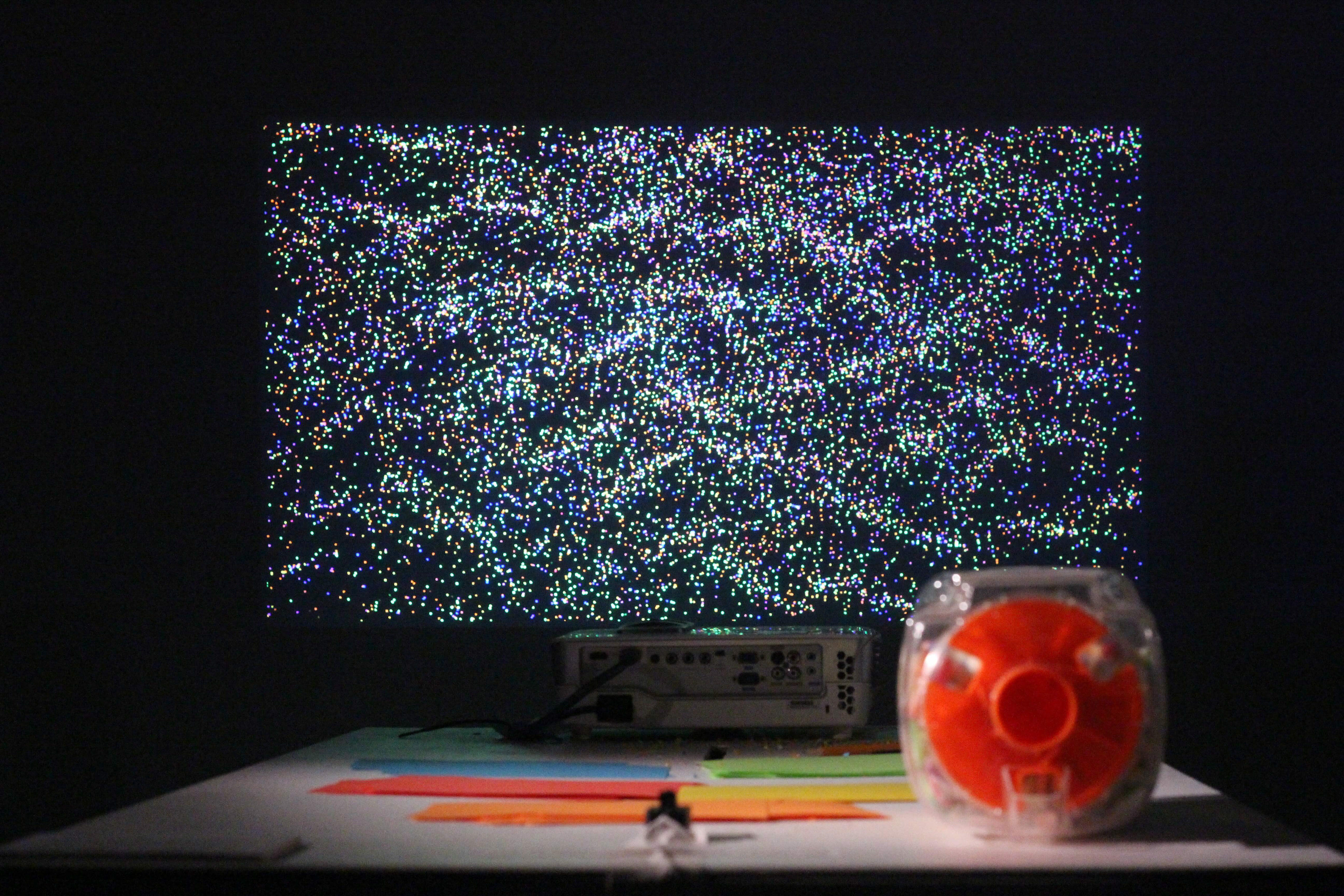
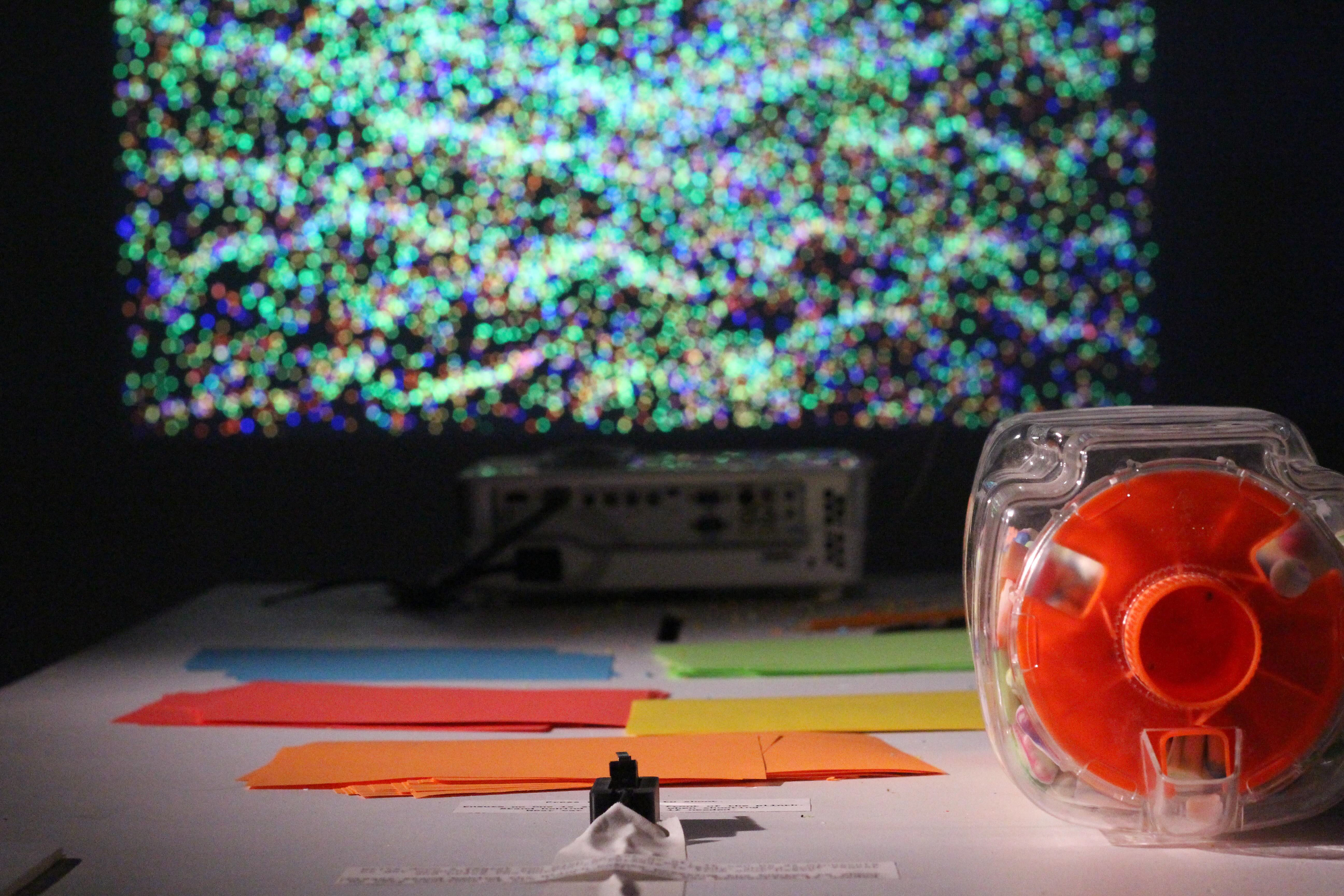
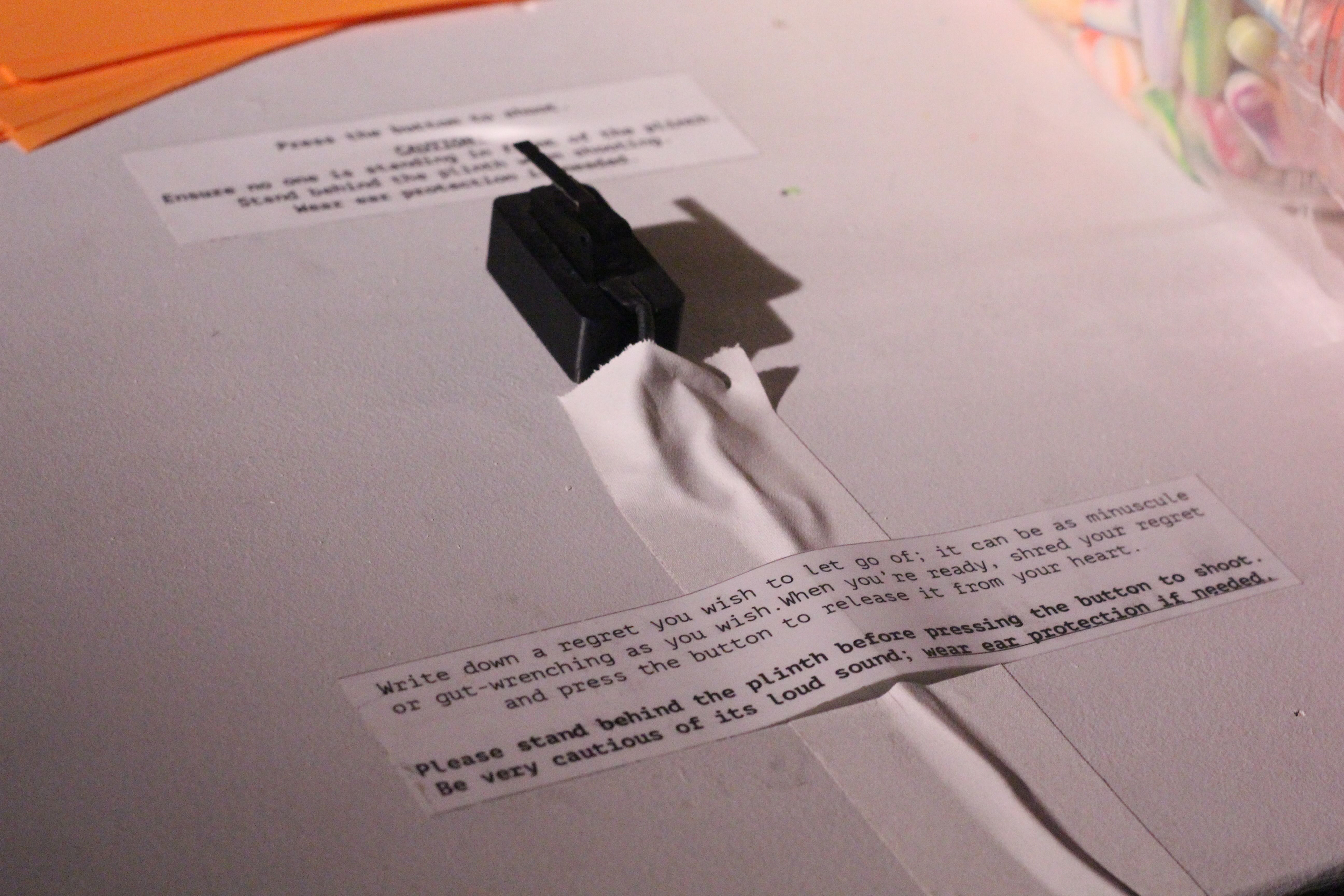
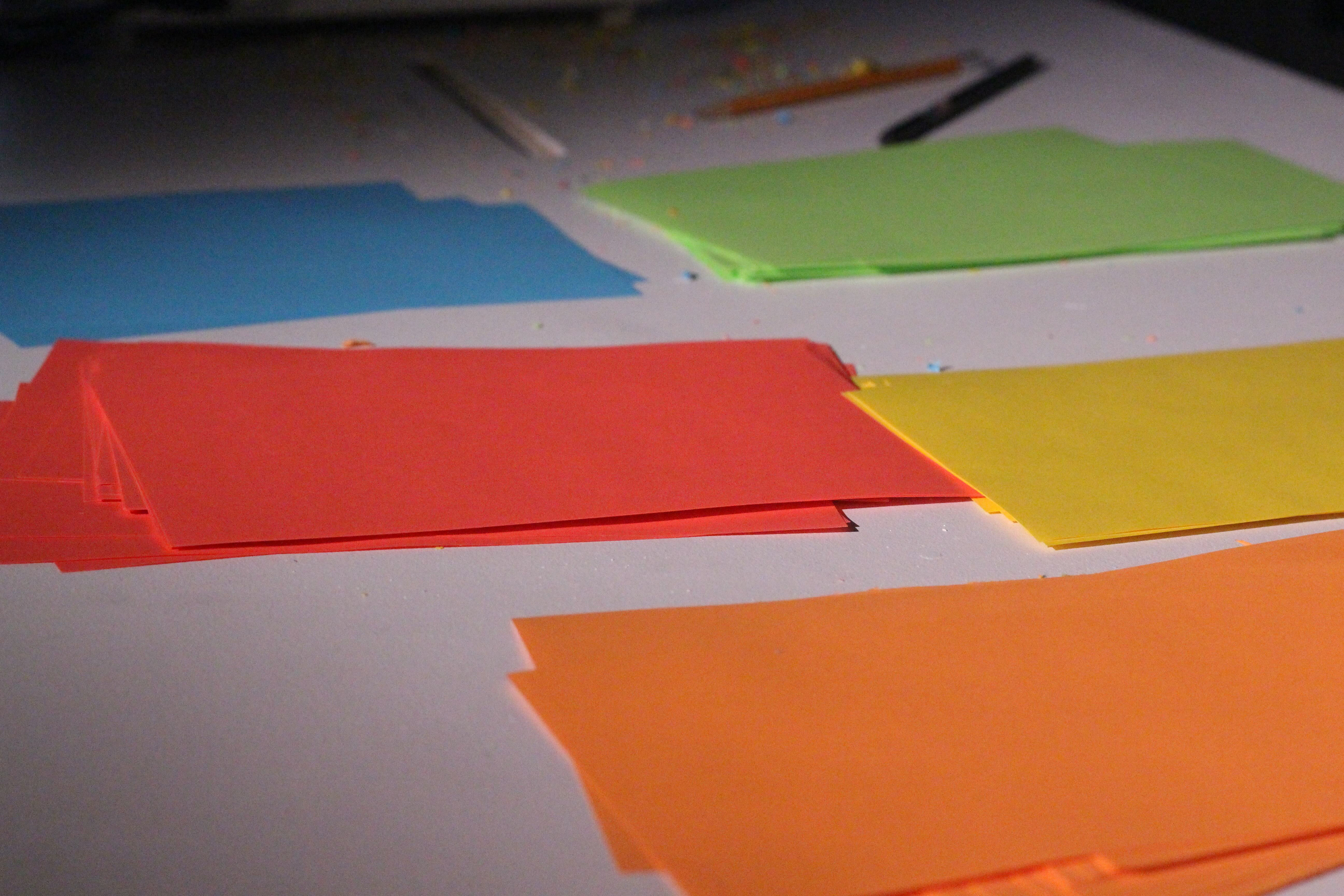
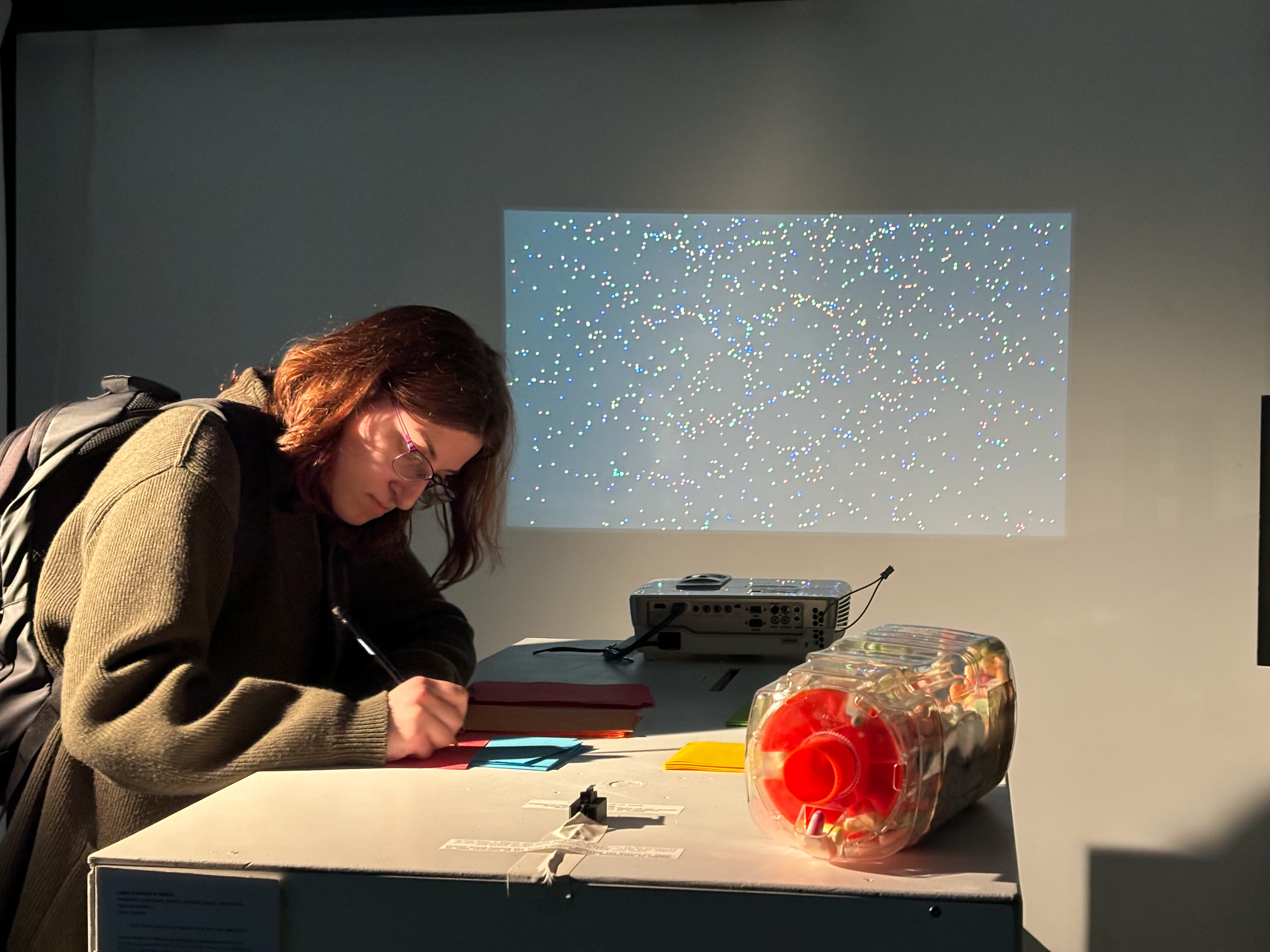
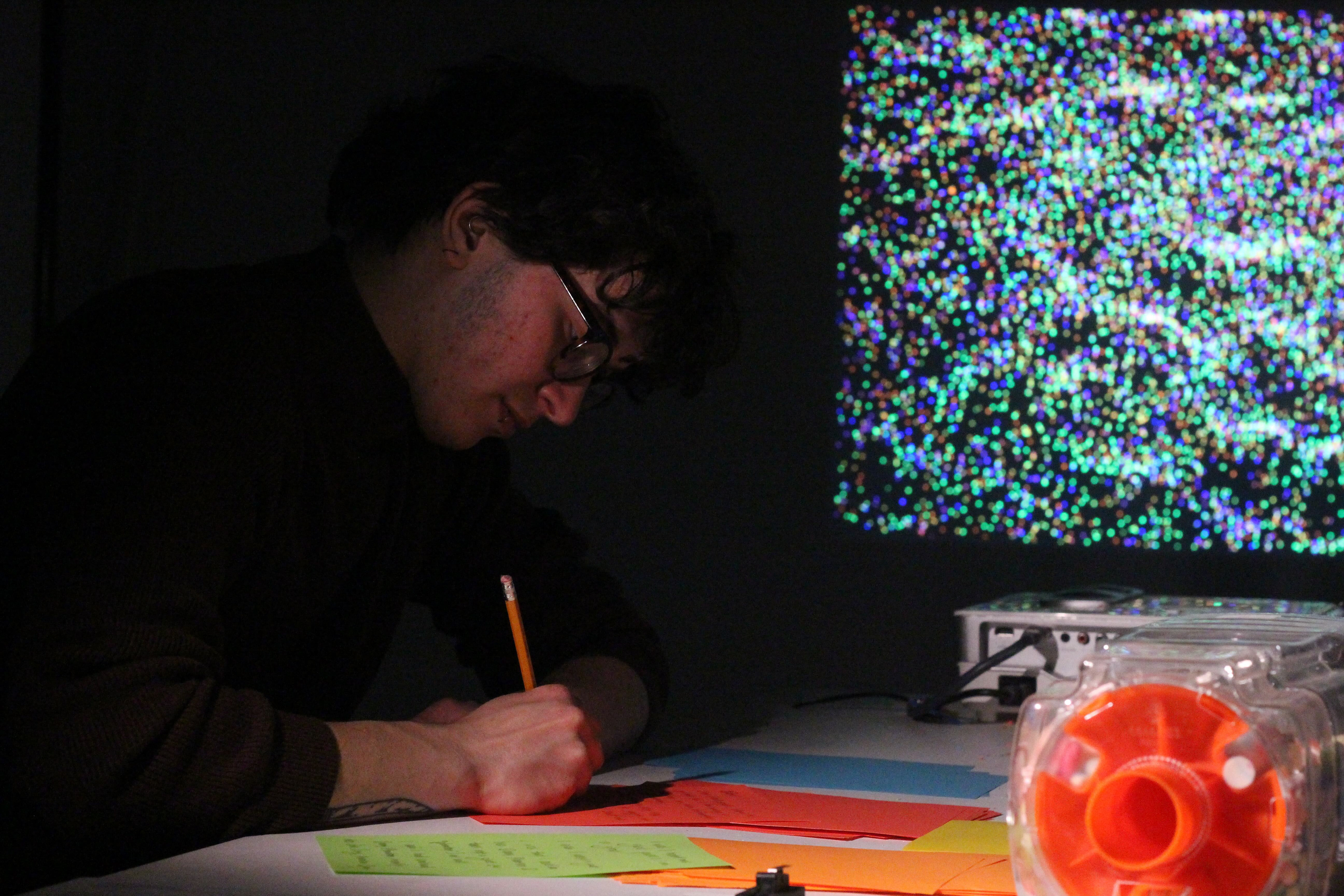
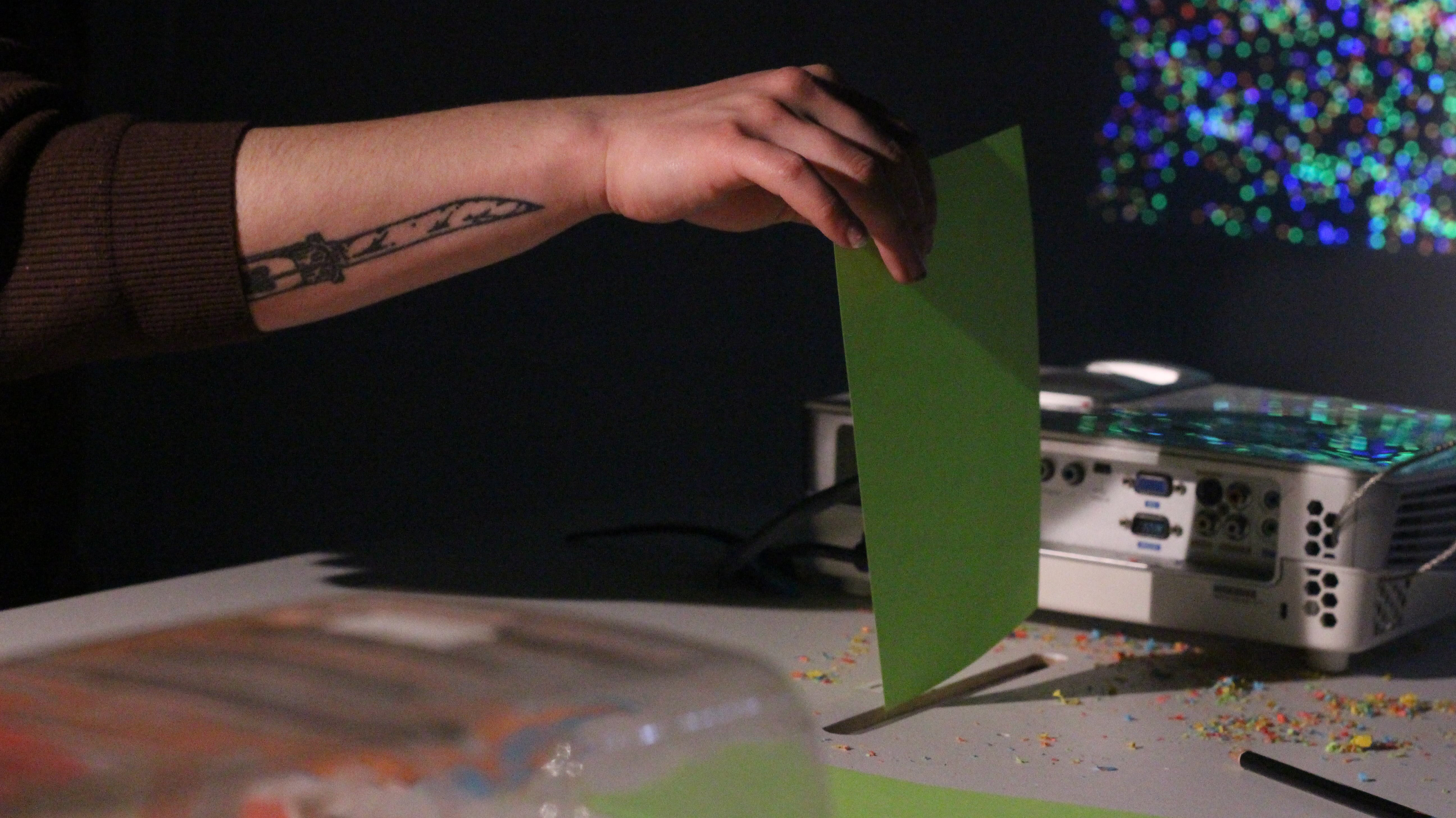
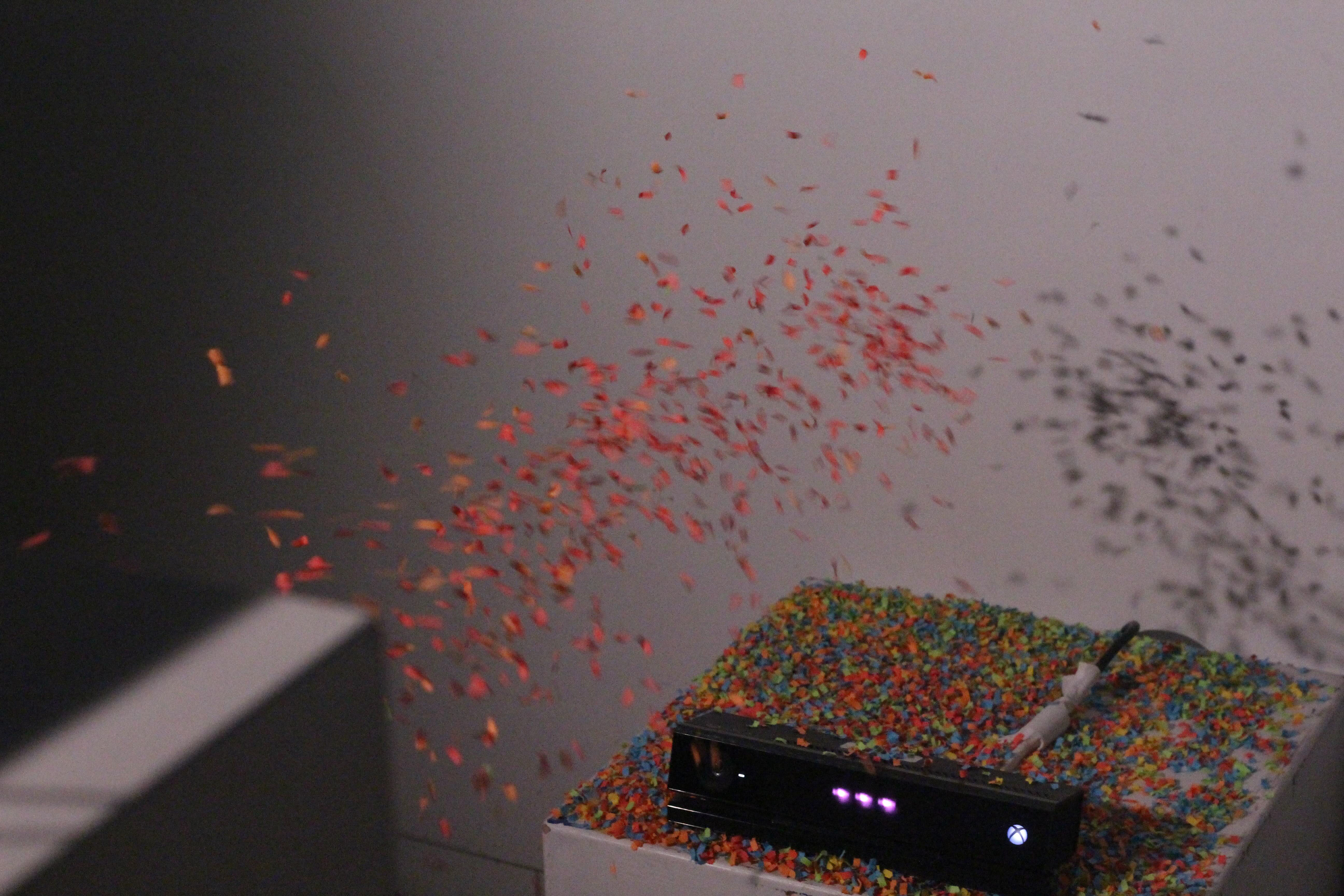
Leave It Behind in Tatters is an interactive installation exploring the self-imposed, painful burden of regret, and the physical manifestation of accepting such guilt by letting it go. Viewers are invited to write a letter about a personal regret, no matter how minuscule or gut-wrenching, to feed into a machine that shreds its contents into tiny confetti-sized pieces. This paper is shot out towards the front-facing wall of the room, where its physical form is transformed into a digital projection of colourful particles as a visually immersive display.
This work served as my undergraduate thesis project as part of the BFA New Media program at Toronto Metropolitan University and was graciously supported by the TD-FCCP New Horizons Scholarship (administered by the RTA School of Media). It was exhibited at the 17th annual New Media Thesis Exhibition: METAMORPHOSIS from April 16th to 25th, 2025.
Artist Statement
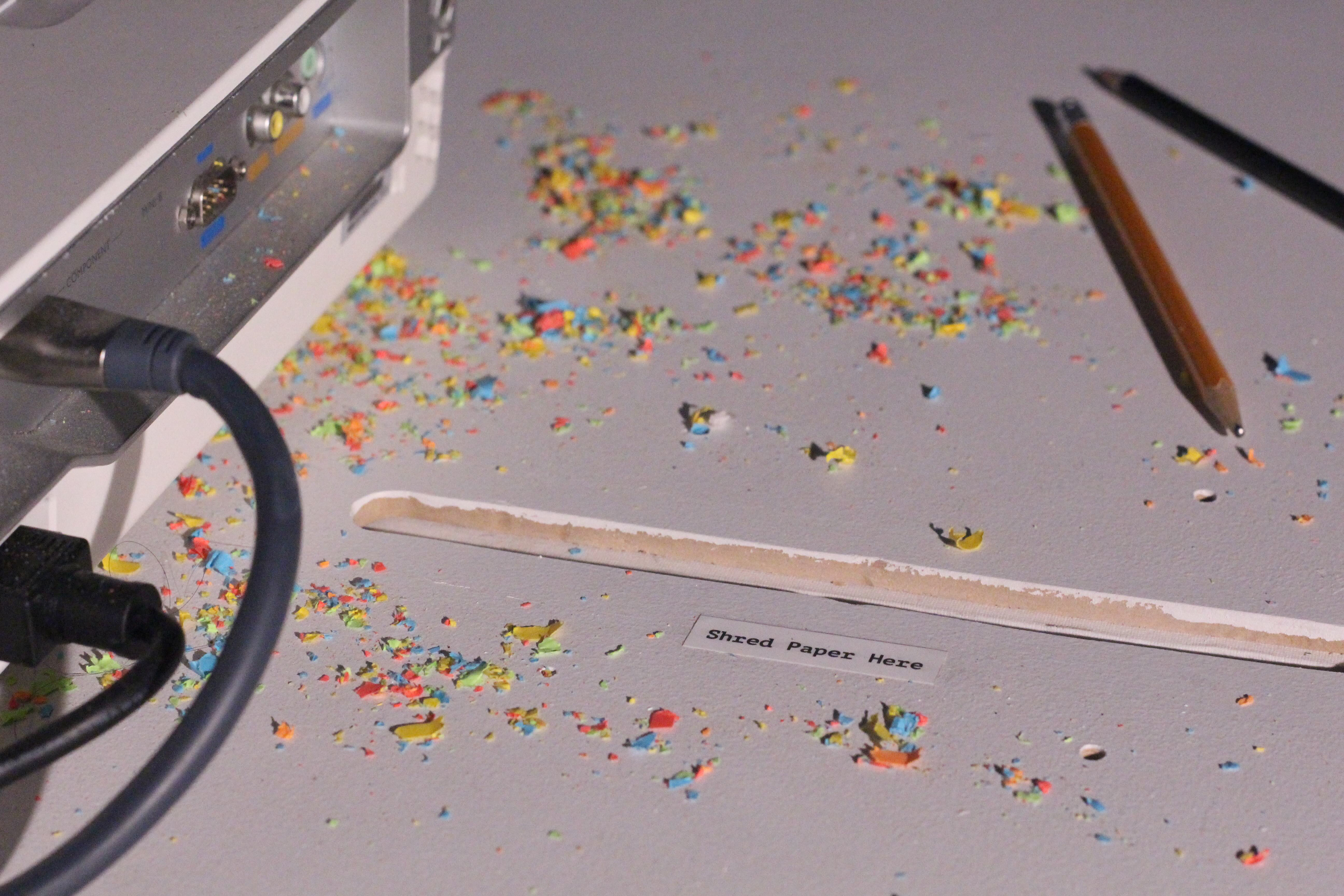
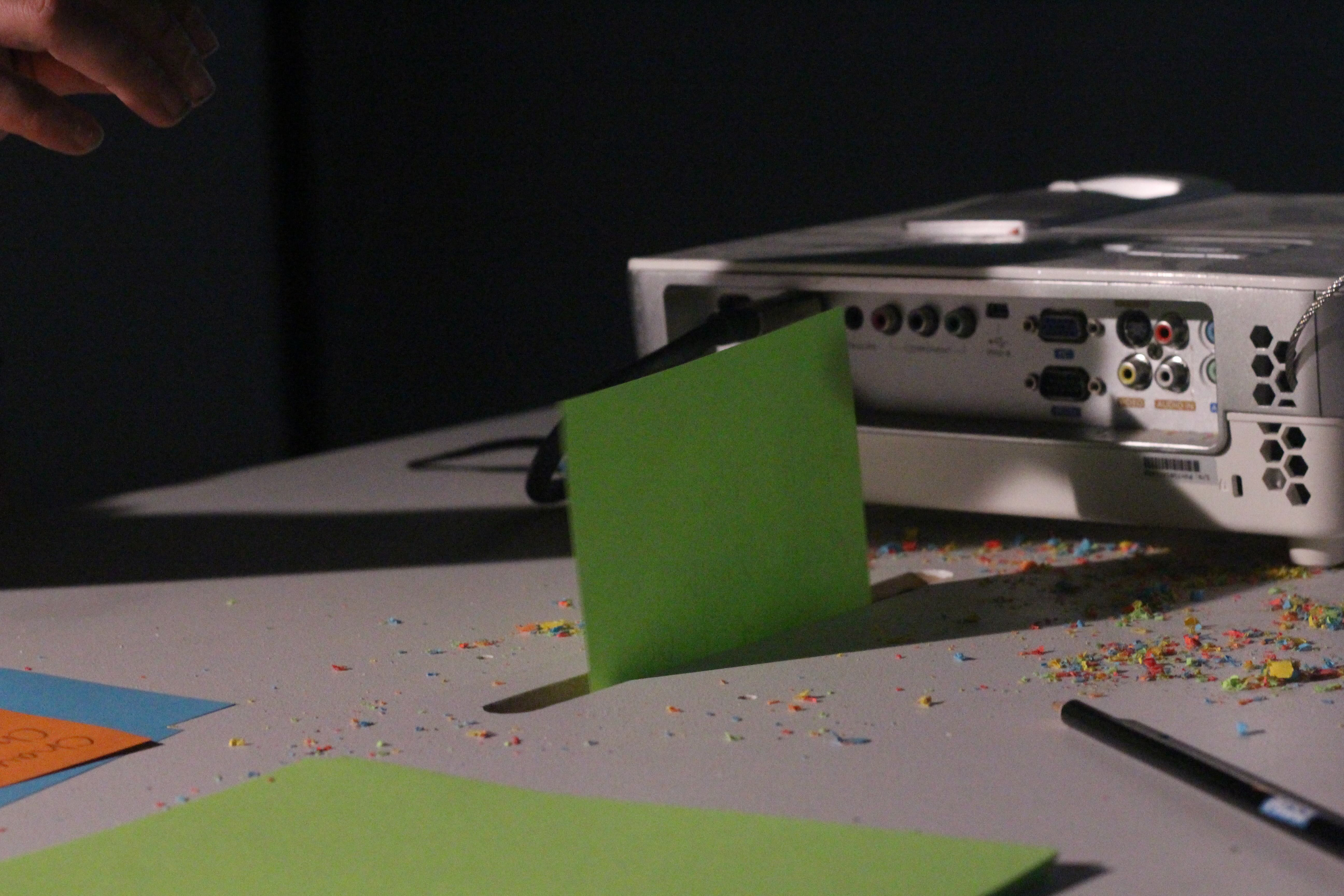
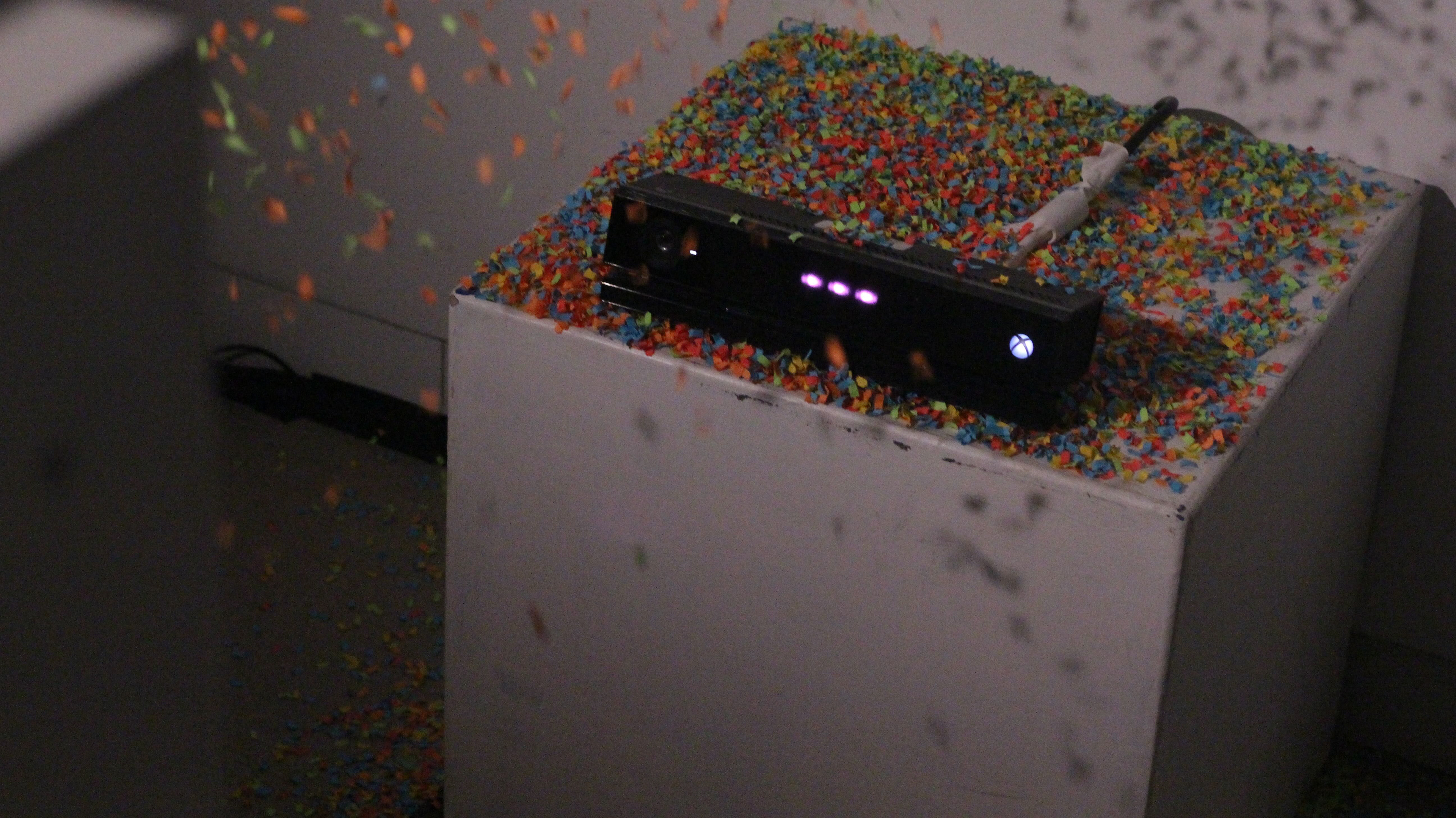
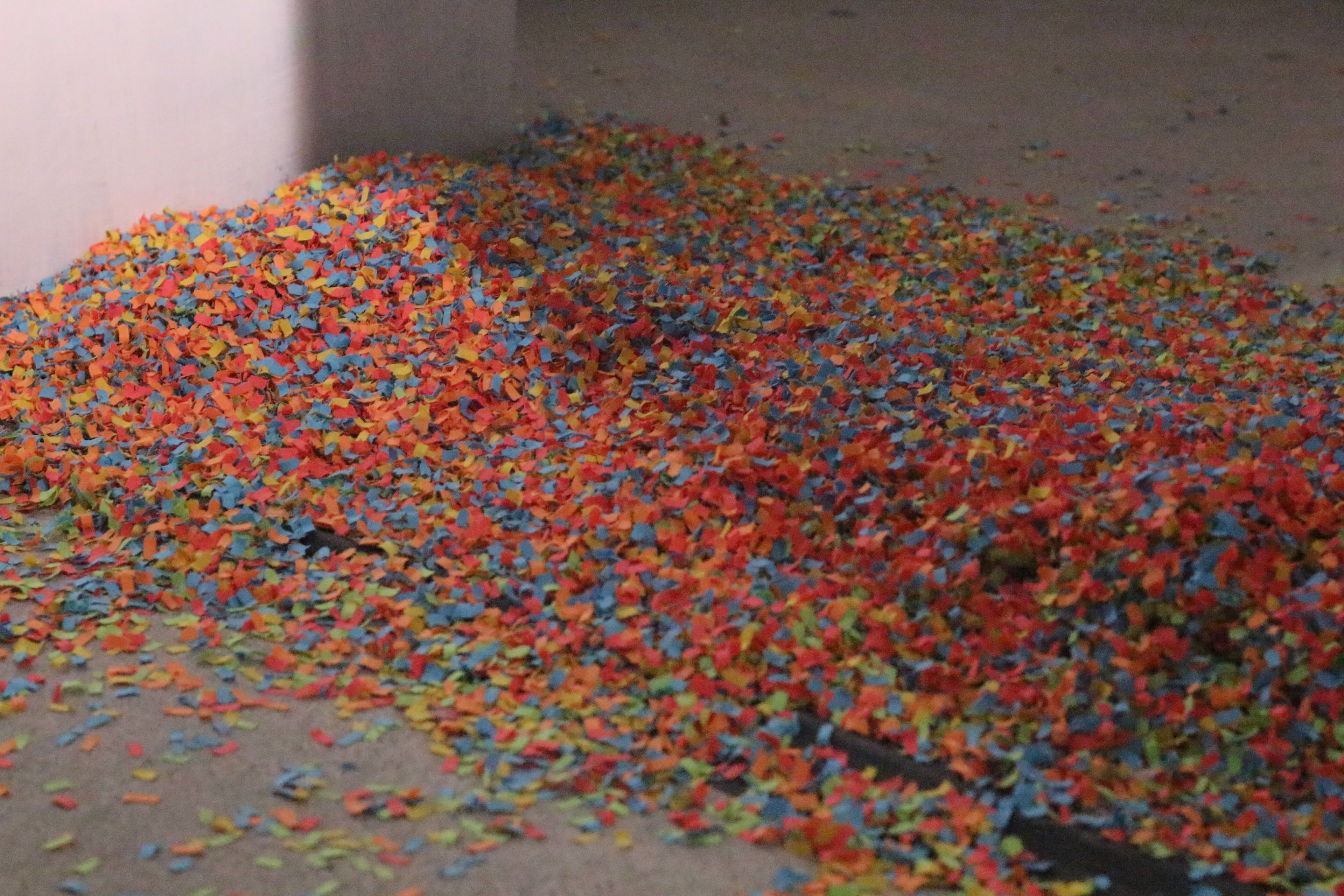
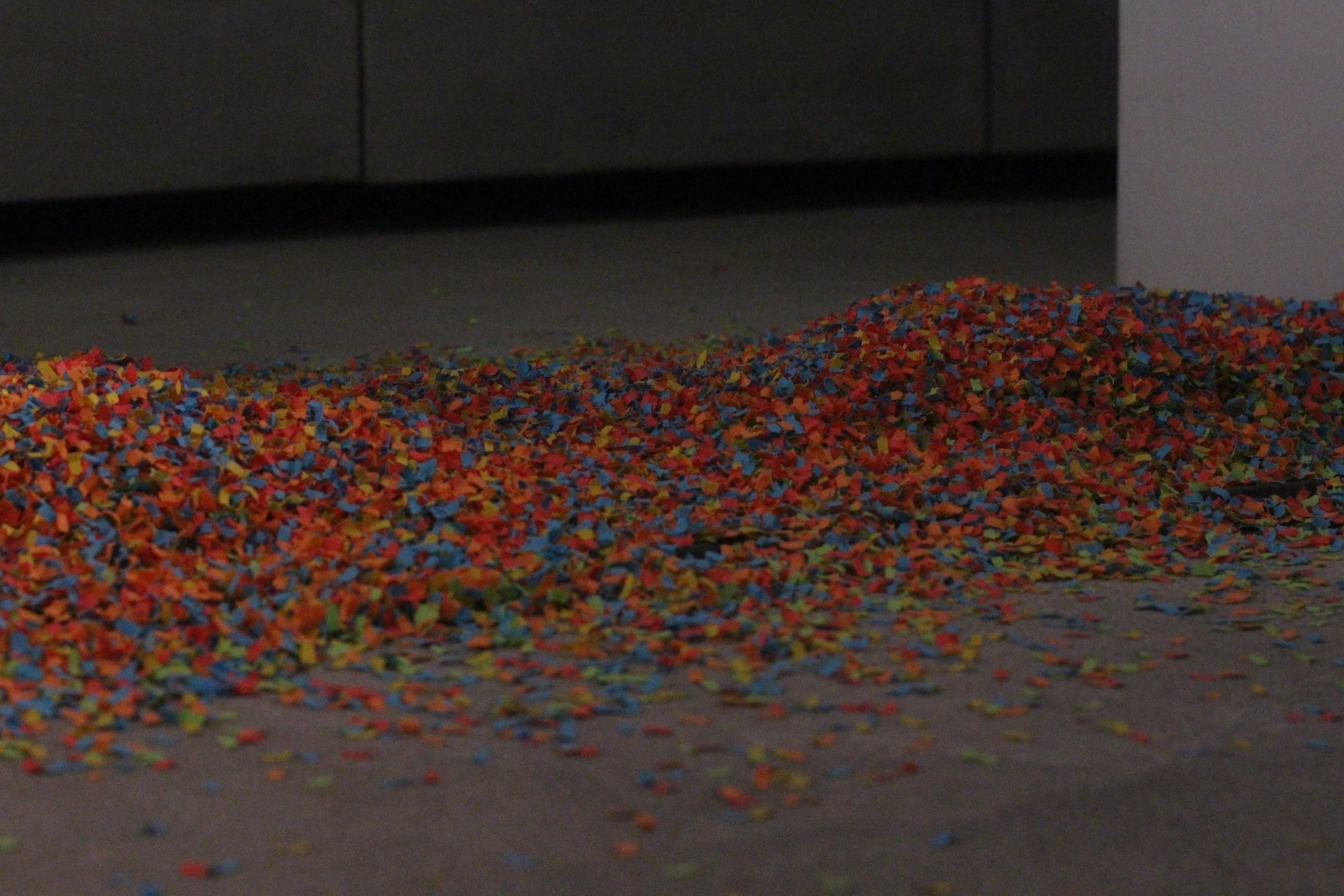
Leave It Behind in Tatters is an interactive installation exploring regret as a self-imposed, painful burden, and the physical manifestation of accepting such guilt by letting it go. Audience members write a letter to themselves about a personal regret, no matter how minuscule or gut-wrenching. This letter is then fed into a slotted opening, where the machine inside shreds the contents into tiny confetti-sized pieces and is collected into the barrel of an air-compressed cannon. When activated, the shredded paper is shot towards and comes into contact with a wall to transform its physical form into a digital projection of colourful particles. Each set of particles generated can be attributed to the live shredded material left behind on the ground through its colour and quantity. As more people share and destroy their letters, the more particles are generated and paper fills the room; illuminating the space in shared catharsis.
The piece positions the audience to confront their regrets in a familiar struggle of self-reflection and forgiveness. This process is inspired by cultural rituals of letting go of past transgressions and negative sentiments, where objects such as lanterns or baskets act as vessels for complex thoughts and emotions. Through this tradition, these artifacts become physical testaments of acknowledgements to past actions and celebrations of acceptance for the future. Similarly within this installation, viewers apply their experiences through writing, committing their thoughts to paper as a tangible expression of their regret. The act of writing and destruction facilitates an intimate process of introspection, feeding into the instinctual urge to tear apart and rid oneself of guilt, but only through revealing these memories to oneself. The release of their emotions as physical and digital particles however also acts as a spectacle, recontextualizing the experience both as one of levity, and as a form of celebration to moving forward.
The reconciliation of one’s regrets is both personal yet anonymously shared within the room, captured through a growing pile of shredded paper as well as the indecipherable words scattered beyond our reality and into a visually immersive display. Individual vulnerability is shared anonymously to organically form the installation’s environment, creating a sense of community and leaving behind a human presence. With each particle roaming the walls of the room, viewers can observe how every new contribution grows the installation through their experience, where comfort can be found in their roots of various emotions that are all treated equally within the space. Each person’s impact on the environment thus forms the audience’s embodied experience–where solace can be found in shared anguish and emotional release.
Thank you to my advisor Mark Argo and the New Media Makerspace staff for helping me bring this project to life, as well as to the 2025 New Media Thesis Curatorial Team for the opportunity to showcase this work.